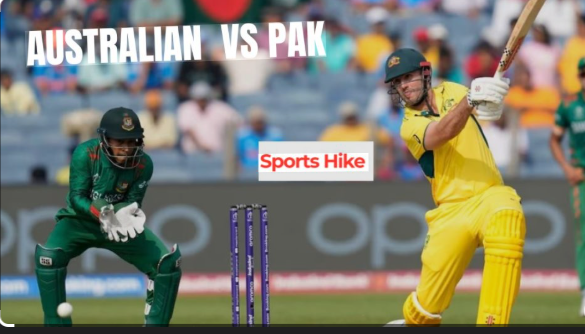
Pakistan National Cricket Team Vs Australian Men's Cricket Team Match Scorecard
Table of Contents
The Pakistan NationalCricket Team vs Australian Men’s Cricket Team match scorecard history is more than just numbers on paper, it is a journey of fierce competition, evolving strategies, and unforgettable cricketing moments. From their early encounters to modern day clashes, this rivalry has showcased contrasting styles, Pakistan’s unpredictability against Australia’s consistency. Each match has added a new chapter filled with pressure situations, iconic performances, and dramatic turnarounds. Scorecards reflect not only runs and wickets but also the intensity and emotion that define this contest. Over decades, this rivalry has grown into one of cricket’s most respected and engaging battles across all formats.
Latest Matches
Tournament
Venue
Date
Toss
Pakistan Score
Australia Score
Result
Series
Player of the Match
Bilateral T20I
Gaddafi Stadium, Lahore
Feb 1, 2026
Pakistan (bat)
207/6 (20 overs)
96 (16.5 overs)
Pakistan won by 111 runs
Australia tour of Pakistan
Mohammad Nawaz (PAK)
Bilateral T20I
Gaddafi Stadium, Lahore
Jan 31, 2026
Pakistan (bat)
198/5 (20 overs)
108 (15.4 overs)
Pakistan won by 90 runs
Australia tour of Pakistan
Salman Agha (PAK)
Bilateral T20I
Gaddafi Stadium, Lahore
Jan 29, 2026
Pakistan (bat)
168/8 (20 overs)
146/8 (20 overs)
Pakistan won by 22 runs
Australia tour of Pakistan
Saim Ayub (PAK)
Bilateral T20I
Bellerive Oval, Hobart
Nov 18, 2024
Pakistan (bat)
117 (18.1 overs)
118/3 (11.2 overs)
Australia won by 7 wkts
Pakistan tour of Australia
Marcus Stoinis (AUS)
Bilateral T20I
Sydney Cricket Ground, Sydney
Nov 16, 2024
Australia (bat)
134 (19.4 overs)
147/9 (20 overs)
Australia won by 13 runs
Pakistan tour of Australia
Spencer Johnson (AUS)
Bilateral T20I
The Gabba, Brisbane
Nov 14, 2024
Pakistan (field)
64/9 (7 overs)
93/4 (7 overs)
Australia won by 29 runs (DLS)
Pakistan tour of Australia
Glenn Maxwell (AUS)
Bilateral ODI
Perth Stadium, Perth
Nov 10, 2024
Pakistan (field)
143/2 (26.5 overs)
140
Pakistan won by 8 wkts
Pakistan tour of Australia
Haris Rauf (PAK)
All-Time Head-to-Head Record
Format
Matches Played
Pakistan Wins
Australia Wins
Draws / Ties / NR
Pakistan Win %
Test
72
15
37
20 Draws
20.83%
ODI
111
36
71
1 Tie, 3 NR
32.43%
T20I
30
16
14
1 NR
53.33%
Overall
213
67
122
24
31.46%
All-Time Batting Leaders
Rank
Player
Team
Matches
Runs
Average
100s
50s
1
Javed Miandad
PAK
~70
~2500+
~35+
–
–
2
Babar Azam
PAK
40+
1800+
45+
5+
10+
3
David Warner
AUS
30+
1600+
40+
4+
8+
4
Younis Khan
PAK
25+
1500+
38+
5+
6+
5
Steve Smith
AUS
25+
1400+
55+
4+
7+
All-Time Bowling Leaders
Rank
Player
Team
Matches
Wickets
Average
Best Figures
1
Wasim Akram
PAK
40+
90+
22+
7/119 (Test)
2
Shane Warne
AUS
20+
80+
25+
Multiple 5-fers
3
Glenn McGrath
AUS
25+
70+
21+
8/24 (ODI)
4
Imran Khan
PAK
30+
65+
24+
–
5
Mitchell Starc
AUS
25+
55+
28+
Multiple 5-fers
When East Met West on the Cricket Field
When the Pakistan National Cricket Team first locked horns with the Australian Men’s Cricket Team, it wasn’t just another bilateral series, it felt like two contrasting cricketing philosophies colliding on the same pitch. Pakistan brought flair, unpredictability, and raw pace, while Australia arrived with discipline, structure, and a never-say-die attitude. The early matches in the 1950s and 60s were as much about learning as they were about competing. Conditions were unfamiliar, pitches behaved differently, and both teams had to adapt quickly. Pakistan’s bowlers relied heavily on natural talent and swing, while Australia’s batsmen focused on technique and patience. Scorecards from those games often told stories of gritty resistance rather than dominance. Low scoring encounters, long partnerships, and sudden collapses became a pattern. Yet beneath those numbers, a rivalry was quietly brewing. Each match added a layer of respect, curiosity, and eventually competitiveness. Those early contests laid the foundation for what would later become one of cricket’s most intriguing and hard fought rivalries across all formats.
Year
Venue
Format
Pakistan Score
Australia Score
1956
Karachi
Test
199 & 160
80 & 187
1959
Melbourne
Test
297 & 187
331 & 154
1964
Lahore
Test
268 & 121
255 & 137
1972
Sydney
Test
218 & 246
314 & 152
1975
Leeds
ODI
205
206/3
Early Battles and Growing Respect
As the rivalry moved into the late 1960s and 1970s, contests between the Pakistan National Cricket Team and the Australian Men’s Cricket Team began to carry a different edge. What once felt like cautious encounters slowly turned into battles filled with intent and belief. Pakistan, no longer just learning the ropes, started challenging Australia with greater confidence, especially on home soil where spin and reverse swing became potent weapons. Australia, on the other hand, relied on its deep batting lineup and disciplined pace attack to maintain control in testing conditions. Matches were no longer one sided affairs. Scorecards began to reflect tighter margins, with draws turning into results and individual brilliance often deciding outcomes. Players from both sides started recognizing each other’s strengths, and with that came a sense of respect that elevated the rivalry. Long innings, patient bowling spells, and tactical field placements defined this era. It was a phase where neither team dominated completely, but both improved constantly, pushing each other to higher standards. The rivalry matured, gaining depth and character with every closely fought contest.
Year
Venue
Format
Pakistan Score
Australia Score
1968
Melbourne
Test
310 & 205
382 & 134/5
1973
Karachi
Test
280 & 233
290 & 225
1975
Birmingham
ODI
266
235
1978
Perth
Test
183 & 264
287 & 161
1979
Lahore
Test
353 & 199
321 & 210
The Era of Legends and Fierce Contests
By the late 1970s and throughout the 1980s, the rivalry between the Pakistan National Cricket Team and the Australian Men’s Cricket Team entered a golden phase defined by iconic players and uncompromising cricket. This was the era when personalities shaped contests as much as performances. Pakistan, led by the charismatic Imran Khan, brought aggression through lethal pace bowling and fearless leadership. Australia, under Allan Border, responded with grit, resilience, and a fighting spirit that refused to break under pressure. Every match felt like a statement. Fast bowlers from both sides attacked relentlessly, while batsmen had to earn every single run. Scorecards from this period often featured dramatic swings, sessions dominated by bowlers, followed by counterattacks from determined batsmen. Close finishes, tense draws, and hard fought victories became common. Individual brilliance stood out, but it was the intensity of competition that defined the era. These were not just matches, they were battles of pride and identity. Each encounter added fuel to the rivalry, making it one of the most respected and fiercely contested clashes in world cricket history.
Year
Venue
Format
Pakistan Score
Australia Score
1980
Melbourne
Test
181 & 349
305 & 225
1983
Karachi
Test
394 & 200/6d
284 & 250
1986
Adelaide
Test
235 & 264
381 & 121/5
1988
Lahore
Test
341 & 216
456 & 102/2
1989
Perth
Test
240 & 208
314 & 135/3
Desert Storms and Sharjah Classics
The rivalry between the Pakistan National Cricket Team and the Australian Men’s Cricket Team found a unique theatre in Sharjah during the 1980s and 1990s, where desert heat, packed crowds, and high stakes created unforgettable cricketing drama. Sharjah was not just a neutral venue, it became a cauldron of pressure where matches often swung in a matter of overs. Pakistan thrived in these conditions, using their flair and crowd support to unsettle Australia, while the Australians relied on discipline and mental toughness to counter the noise and expectations. Close finishes became the norm, with last over thrillers and nail biting chases etched into memory. Scorecards from Sharjah often showed tight margins, sudden collapses, and match winning cameos that turned games on their head. Controversial umpiring decisions and emotional on field exchanges only added to the intensity. Players from both sides produced standout performances under extreme pressure, making these encounters feel larger than life. Sharjah became a symbol of this rivalry’s unpredictability, where no total felt safe and no match was decided until the very last ball.
Year
Venue
Format
Pakistan Score
Australia Score
1986
Sharjah
ODI
245/9
244/7
1990
Sharjah
ODI
209/8
208
1994
Sharjah
ODI
257/6
256/9
1996
Sharjah
ODI
248/7
249/6
1998
Sharjah
ODI
229
232/5
World Cup Clashes and High Stakes Drama
When the Pakistan National Cricket Team faced the Australian Men’s Cricket Team on the World Cup stage, the rivalry reached an entirely different level of intensity. These were not just matches, they were moments where careers were defined and nations held their breath. Australia often entered as a dominant force with a structured approach, while Pakistan carried their unpredictable magic that could turn games in a matter of overs. The pressure of global tournaments exposed both brilliance and vulnerability. There were matches where Pakistan’s explosive bowling dismantled strong Australian lineups, and others where Australia’s clinical chasing under pressure silenced roaring Pakistani support. Scorecards from these encounters reveal dramatic collapses, match winning partnerships, and standout individual performances. Every run carried weight, every wicket shifted momentum. Knockout games, in particular, amplified the tension, where a single mistake could end a campaign. These contests showcased not just skill, but temperament under pressure. Over time, World Cup meetings between these two sides became defining chapters of their rivalry, remembered for their drama, intensity, and unforgettable cricketing moments.
Year
Tournament
Stage
Pakistan Score
Australia Score
1975
World Cup
Group
205
206/3
1987
World Cup
Semifinal
249/6
250/8
1999
World Cup
Final
132
133/2
2003
World Cup
Group
86
310/8
2015
World Cup
Quarterfinal
213
216/4
Captaincy Battles and Tactical Masterclasses
As the rivalry evolved, matches between the Pakistan National Cricket Team and the Australian Men’s Cricket Team increasingly became contests of leadership as much as skill. Captains were no longer just decision makers, they were strategists shaping the entire narrative of the game. Pakistan’s leaders often leaned on instinct, using surprise bowling changes, aggressive field placements, and unconventional tactics to disrupt Australia’s rhythm. In contrast, Australian captains brought a calculated approach, relying on data, discipline, and long term pressure building strategies. This contrast created fascinating battles within the larger contest. Scorecards from these matches often reflected the impact of these decisions. A well timed bowling change could trigger a collapse, while a bold declaration or chasing strategy could turn the game around. Field placements played a silent but crucial role, cutting off boundaries or creating wicket taking opportunities. These encounters highlighted how leadership could influence outcomes beyond individual performances. The rivalry became a chess match, where every move mattered and captains were constantly trying to outthink each other under intense pressure.
Year
Captain Pakistan
Captain Australia
Key Tactical Move
Result Impact
1987
Imran Khan
Allan Border
Aggressive pace rotation
Close Australian win
1999
Wasim Akram
Steve Waugh
Early bowling attack strategy
Australia dominated
2002
Waqar Younis
Ricky Ponting
Defensive field placements
Australia controlled
2010
Shahid Afridi
Michael Clarke
Spin-heavy middle overs
Pakistan fought back
2019
Sarfaraz Ahmed
Aaron Finch
Powerplay batting approach
Australia edged win
The T20 Era and Changing Dynamics
With the arrival of T20 cricket, the rivalry between the Pakistan National Cricket Team and the Australian Men’s Cricket Team underwent a dramatic transformation. The game became faster, more aggressive, and far less predictable. Traditional patience gave way to explosive batting, innovative stroke play, and fearless decision making. Pakistan embraced their natural flair, relying on raw pace, mystery spin, and unpredictable brilliance to unsettle Australia. Meanwhile, Australia adapted with calculated aggression, powerful hitters, and well structured game plans designed for high scoring encounters. Matches often turned into high intensity battles where momentum shifted within a few overs. Scorecards in this era reflect massive totals, quickfire fifties, and bowlers being tested under relentless pressure. Death overs became decisive, with games frequently going down to the final ball. Fielding standards improved significantly, adding another layer of competitiveness. This format also introduced new heroes, players who thrived under pressure and delivered match winning performances in crunch moments. The T20 era didn’t just change how these teams played, it redefined the rivalry itself, making it faster, sharper, and more thrilling than ever before.
Year
Format
Pakistan Score
Australia Score
Result
2010
T20
191/6
197/7
Australia won
2012
T20
149/6
150/4
Australia won
2014
T20
159/9
160/3
Australia won
2018
T20
190/4
173/10
Pakistan won
2021
T20
176/4
177/5
Australia won
Modern Day Rivalry and New Heroes
In the modern era, the rivalry between the Pakistan National Cricket Team and the Australian Men’s Cricket Team has evolved into a finely balanced contest shaped by new generation players and advanced strategies. The unpredictability that once defined Pakistan still exists, but it is now supported by improved consistency and better fitness standards. Australia, known for its structured dominance, continues to adapt with aggressive batting lineups and versatile bowling attacks. What stands out in recent years is how young players have stepped into the spotlight, delivering performances that match the legacy of past greats. Scorecards now reflect competitive totals, calculated chases, and contributions from multiple players rather than reliance on a few stars. Bilateral series and ICC tournaments have produced closely fought matches where momentum shifts frequently. Technology, data analysis, and modern coaching methods have also influenced tactics, making every decision more precise. These encounters are no longer predictable, with both teams capable of dominating on their day. The emergence of new heroes has ensured that the rivalry remains fresh, competitive, and deeply engaging for fans across the world.
Year
Format
Key Player (Pakistan)
Key Player (Australia)
Match Result
2019
ODI
Babar Azam
David Warner
Australia won
2020
T20
Mohammad Rizwan
Aaron Finch
Series drawn
2022
Test
Abdullah Shafique
Pat Cummins
Australia won
2023
ODI
Fakhar Zaman
Mitchell Marsh
Australia won
2024
Test
Saud Shakeel
Steve Smith
Australia won
Statistical Deep Dive into Head to Head Battles
Numbers often reveal what emotions try to hide, and in the rivalry between the Pakistan National Cricket Team and the Australian Men’s Cricket Team, the scorecards tell a story of sustained competition, dominance phases, and shifting momentum across formats. Australia has traditionally held an edge, especially in Tests and World Cups, thanks to their consistency and ability to perform under pressure. Pakistan, however, has produced remarkable results, particularly in conditions that favor their bowling attack and in limited overs cricket where unpredictability becomes an advantage. Head to head records show how closely contested many of these matches have been, with several games decided by narrow margins. Individual player stats also highlight the impact of key performers, from top run scorers anchoring innings to strike bowlers delivering breakthroughs at crucial moments. Over the decades, trends have shifted, with Pakistan improving in modern formats while Australia continues to maintain a strong overall record. These statistics are more than just numbers, they reflect eras of dominance, moments of brilliance, and the evolving nature of one of cricket’s most compelling rivalries.
Format
Matches Played
Pakistan Wins
Australia Wins
Draw/No Result
Test
70
15
36
19
ODI
110
34
72
4
T20
25
10
14
1
World Cup Matches
12
3
9
0
Overall
205
62
122
21
Conclusion
The Pakistan National Cricket Team vs Australian Men’s Cricket Team match scorecard legacy stands as a testament to cricket’s enduring appeal and competitive spirit. This rivalry has delivered thrilling encounters, legendary performances, and moments that continue to resonate with fans worldwide. From low scoring Tests to high intensity T20 clashes, every format has added depth to their story. Beyond statistics, it is the passion, resilience, and determination of both teams that define this contest. As new players emerge and the game continues to evolve, this rivalry remains a powerful reminder that great cricket is built on challenge, character, and unforgettable moments.