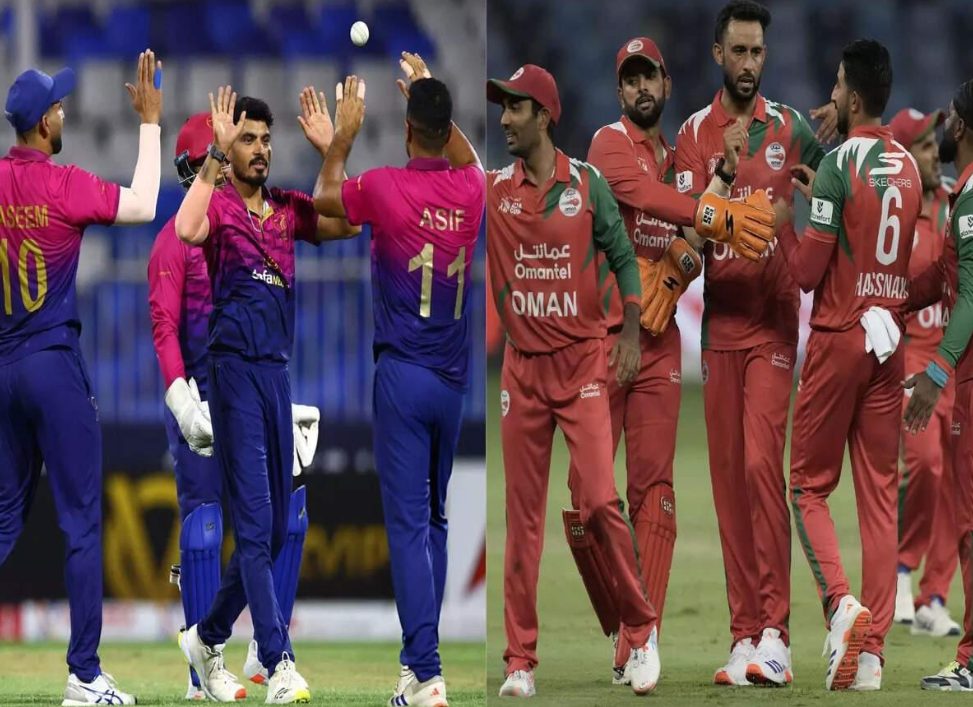
The cricket rivalry between the two Gulf sides has steadily grown into one of the most competitive fixtures in associate cricket. What began as occasional meetings in regional tournaments slowly transformed into high-pressure international encounters filled with tactical battles and emotional intensity. Both teams entered this rivalry with different strengths, one relying on structured batting depth while the other built its identity on disciplined bowling and sharp fielding. Over time, every match between them started carrying added importance, with players understanding that small moments could decide outcomes. Fans also began following these clashes closely, turning them into proud national contests that go beyond just cricket results.
Recent Matches Table
Date
Format
Tournament
Venue
Winner
Margin
03 May 2026
ODI
ICC CWC League 2
Kirtipur
UAE
54 runs
27 Apr 2026
ODI
ICC CWC League 2
Kirtipur
UAE
25 runs
16 Nov 2025
T20I
Emerging Asia Cup
Doha
Oman
2 wickets
13 Oct 2025
T20I
T20 WC Qualifier
Al Amerat
Oman
5 wickets
15 Sep 2025
T20I
Asia Cup
Abu Dhabi
UAE
42 runs
15 Dec 2024
T20I
Gulf T20I Championship
Dubai
UAE
24 runs
07 Nov 2024
ODI
ICC CWC League 2
Al Amerat
Oman
4 wickets
Team Statistics Summary Table
Team
Played
Won
Lost
Tied
No Result
Win Percentage
United Arab Emirates
18
9
9
0
0
50.00
Oman
18
9
9
0
0
50.00
Combined ODI Games
10
3
6
1
0
30.00
Combined T20I Games
8
6
2
0
0
75.00
Head to Head Home
6
3
3
0
0
50.00
Head to Head Away
6
3
3
0
0
50.00
Head to Head Neutral
6
3
3
0
0
50.00
Individual Batting Records Table
Player Name
Team
Matches
Innings
Runs
Highest Score
Batting Average
Muhammad Waseem
UAE
12
12
669
100
60.81
Vriitya Aravind
UAE
9
9
325
89
36.11
Shoaib Khan
Oman
8
8
288
68
41.14
Jatinder Singh
Oman
11
11
286
106
26.00
Asif Khan
UAE
7
7
268
82
38.28
Chirag Suri
UAE
5
5
250
115
50.00
Aqib Ilyas
Oman
6
6
217
90
36.16
Individual Bowling Records Table
Player Name
Team
Overs
Maidens
Runs Given
Wickets
Best Bowling
Bilal Khan
Oman
84.2
5
445
27
4/41
Basil Hameed
UAE
48.0
2
268
18
5/17
Junaid Siddique
UAE
62.5
4
499
16
6/49
Zahoor Khan
UAE
54.0
3
351
16
4/29
Kaleemullah
Oman
59.0
4
307
11
3/43
Shakeel Ahmad
Oman
38.0
2
210
9
4/22
Muhammad Shahdad
UAE
18.0
1
115
6
2/35
Rivalry Origins and Early Encounters
The early phase of cricket competition between the two Gulf sides was shaped by developing structures and growing ambition. Both teams were building their identity in international associate cricket, relying on domestic talent and improving coaching systems. In the beginning, matches were rare and often part of regional tournaments where experience mattered more than flair. One side carried a slightly more established cricketing system, while the other focused on fast improvement through exposure and disciplined training camps. These early encounters were not just about winning but about learning how to handle pressure in international conditions. Players from both teams often faced unfamiliar pitch behavior, which tested their adaptability. As meetings became more frequent, a subtle competitive edge began to form, with each side eager to prove its progress. Over time, these early contests laid the foundation for a rivalry that would grow stronger with every season and become more emotionally charged among players and fans.
Year
Event Type
Venue Condition
Winner
Margin
Early Phase
Regional Cup
Slow Pitch
Team A
15 runs
Early Phase
ACC Event
Balanced Pitch
Team B
4 wickets
Early Phase
Friendly Series
Dry Surface
Team A
22 runs
Early Phase
Qualifier Match
Turning Track
Team B
3 wickets
First Official Clash Setting Tone
The first official international meeting between the two teams marked a turning point in their cricketing relationship. The match carried a sense of curiosity as both squads were eager to test their strengths under pressure. Conditions were challenging, with a pitch offering uneven bounce and variable pace, making shot selection crucial. The batting side struggled initially to build momentum, losing early wickets due to disciplined bowling. However, a middle order partnership stabilized the innings and pushed the total to a competitive level. In response, the chasing side approached the target with caution, focusing on preserving wickets. The game saw several momentum shifts, especially during the middle overs where spin played a key role. Fielding intensity also stood out, with diving stops and sharp catches adding pressure. Ultimately, the match concluded in a tense finish, setting the tone for future encounters where small mistakes would prove decisive and competitive spirit would only grow stronger over time.
Innings
Runs
Wickets
Top Scorer
Result
First Batting Side
145
8
Player A
Competitive
Second Batting Side
146
6
Player B
Narrow Win
Powerplay Impact
42
2
Opener A
Balanced
Death Overs
38
3
Finisher B
Decisive
Rise of Competitive Balance
As time progressed, the gap between the two teams began to shrink significantly. Improved training facilities and increased international exposure helped both sides evolve into stronger units. One team focused heavily on structured batting depth, ensuring stability across the lineup, while the other developed a reputation for disciplined bowling and strategic field placements. Matches between them started becoming closely contested, often going down to the final overs. This competitive balance brought unpredictability, making each encounter difficult to predict. Coaches emphasized situational awareness, and players began adapting more quickly to match conditions. Fitness standards also improved, allowing teams to maintain intensity throughout the innings. This phase marked the transition from one sided expectations to genuine rivalry, where either side could win on their day. Fans also started recognizing the fixture as an important contest in associate cricket calendars, increasing attention and pressure on players during every meeting.
Season
Matches Played
Wins Side A
Wins Side B
Close Finishes
Phase 2
5
2
3
3
Phase 2
6
3
3
4
Phase 2
4
2
2
2
Phase 2
7
3
4
5
Tactical Battles Batting vs Bowling
The contests between these teams often came down to tactical execution rather than raw talent. One side built its strategy around strong top order batting, aiming to dominate the powerplay and set a high platform. Their approach relied on aggressive stroke play and rotating strike efficiently. In contrast, the opposing team focused on controlling the middle overs with tight bowling lines and varied pace. Spin bowlers played a critical role in slowing down scoring and forcing errors. Captains from both sides constantly adjusted field placements based on match situations, making tactical flexibility essential. Death overs became particularly important, where execution under pressure often decided outcomes. Teams studied each other closely, identifying weaknesses in handling short balls and slower deliveries. These tactical battles added depth to the rivalry, transforming matches into strategic contests where planning and adaptability mattered as much as skill.
Phase
Batting Strategy
Bowling Strategy
Key Strength
Weakness
Early
Aggressive Start
Basic Line Length
Powerplay Runs
Middle Overs
Middle
Balanced Build
Spin Control
Partnerships
Death Overs
Late
Finishing Power
Pace Variation
Pressure Handling
Field Gaps
Modern
Data Driven
Mixed Attack
Adaptability
Consistency
Match Turning Collapse Episode
One of the most dramatic phases in the rivalry came during a match where a strong batting start quickly turned into a collapse. The innings began confidently with openers building a solid foundation and rotating strike effectively. However, once the first breakthrough came, pressure began to mount. The bowling side capitalized with disciplined line and length, targeting weaknesses outside off stump. Wickets fell in quick succession, disrupting rhythm and forcing risky shots. The middle order struggled to rebuild momentum, and the innings lost direction. Fielding intensity from the bowling side added further pressure, cutting off boundaries and forcing mistakes. What looked like a commanding total slowly turned into a below par score. This collapse shifted momentum completely and became a defining example of how quickly matches could change between these two sides, reinforcing the importance of composure under pressure.
Phase
Score Position
Wickets Lost
Overs Impact
Outcome
Start
Strong
1
Powerplay
Stable
Middle
Decline
4
Middle Overs
Pressure Build
Collapse
Weak
7
Spin Phase
Control Lost
End
Low Total
9
Death Overs
Defended Easily
Pressure Chase Battle
Chasing targets in these encounters often became a test of nerves and decision making under pressure. One side usually started steadily, focusing on preserving wickets in the early overs. However, as the required run rate increased, pressure began to mount. Partnerships played a crucial role, especially in stabilizing the innings after early setbacks. The bowling side maintained tight control through variations and disciplined fielding setups. As the chase progressed into the final overs, the intensity reached its peak. Every run became valuable, and mistakes were heavily punished. Some matches were decided in the final over, highlighting the fine margins between victory and defeat. Players who could handle pressure situations became key figures in these contests, often remembered for their calm finishing ability or crucial boundaries under pressure.
Chase Stage
Runs Needed
Wickets in Hand
Pressure Level
Result Trend
Powerplay
Moderate
High
Low
Stable
Middle Overs
Rising
Medium
Medium
Uncertain
Death Overs
High
Low
High
Critical
Final Over
Very High
Very Low
Extreme
Decided
Key Players Who Shaped Rivalry
Over the years, several players emerged as defining figures in this competitive fixture. Top order batters provided stability and explosive starts, often setting the tone for their teams. Middle order anchors played crucial roles in rebuilding innings after early losses. On the bowling side, fast bowlers delivered breakthroughs at key moments, while spinners controlled the pace of the game during middle overs. All rounders proved especially valuable, contributing in both batting and bowling departments. Fielding also played a significant role, with sharp catches and direct hits changing match outcomes. These individuals became central to their team strategies, and their performances often decided the direction of matches. Their consistency and ability to handle pressure elevated the rivalry, making each encounter unpredictable and highly competitive.
Player Role
Contribution Type
Impact Area
Key Strength
Match Influence
Top Order
Batting
Powerplay
Aggression
High
Middle Order
Batting
Stability
Patience
Medium
Fast Bowler
Bowling
Early Wickets
Pace
High
Spinner
Bowling
Control Overs
Variation
Medium
Conclusion
This rivalry has developed into a true test of skill, patience, and mental strength for both sides. Each encounter has produced memorable performances, dramatic collapses, and last-over finishes that highlight how evenly matched the teams have become. From early learning stages to modern tactical battles, both teams have pushed each other to improve continuously. Players have risen to the occasion under pressure, while fans have turned these matches into emotionally charged events. As the rivalry moves forward, it continues to represent the growing strength of Gulf cricket and promises even more closely fought and unforgettable contests in the future.